
Is Cortisone Actually Healing Your Foot Pain, or Just Masking It?
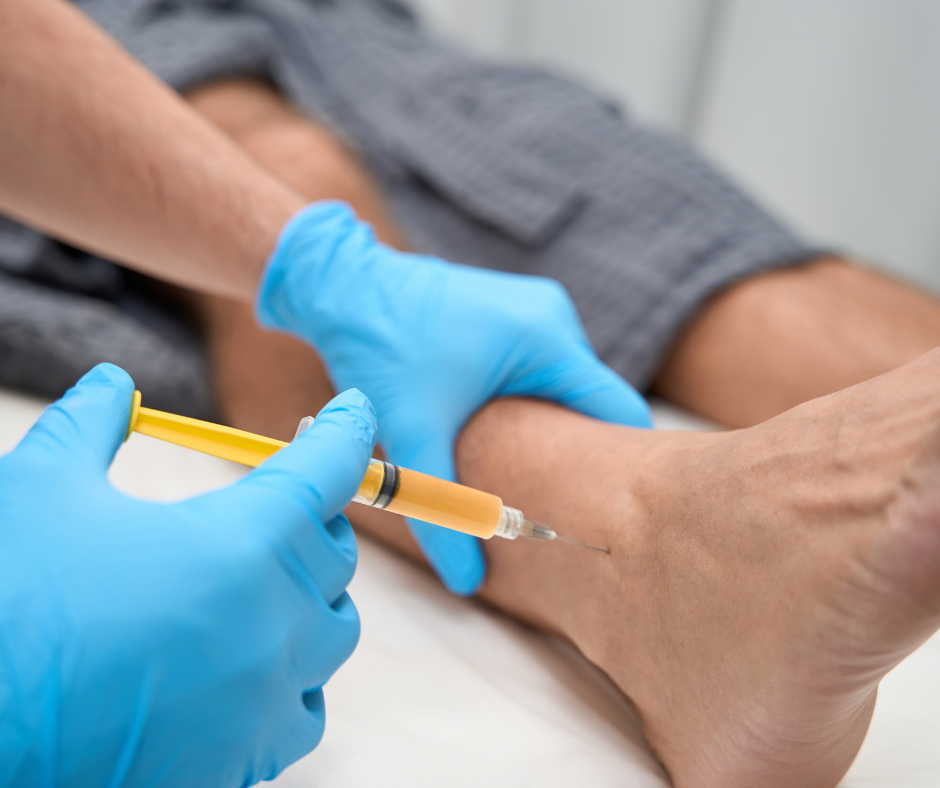
For decades, the standard medical response to severe heel pain was a quick cortisone injection. It was considered the gold standard for athletes and everyday patients alike: a fast, effective way to turn off the inflammation and get back on your feet. But modern podiatry is experiencing a major paradigm shift. Patients and doctors alike are beginning to ask a critical question:
Is cortisone actually healing the injury, or is it just masking the symptom?
If you are dealing with chronic foot pain and are tired of temporary fixes, Clifton Foot & Ankle Center is here to explain. Keep reading to learn why regenerative medicine is replacing the traditional steroid needle.
The Cortisone Dilemma: Weakening the Foundation
Cortisone is a powerful anti-inflammatory medication. When injected into a painful area, it rapidly suppresses the body’s local immune response, which significantly reduces swelling and pain. However, cortisone does not repair torn or degenerated tissue.
In fact, it often does the exact opposite.
- Clinical studies have repeatedly shown that multiple cortisone injections into a localized area can actively degrade the collagen fibers within the tendon or ligament.
- Over time, this weakens the structural integrity of your foot.
- If you are masking the pain with cortisone and continuing to run or walk heavily on a weakened Achilles tendon or plantar fascia, you are increasing your risk of a complete tissue rupture!
The Regenerative Shift: Enter DPMX Injections
The goal of modern sports medicine is no longer just pain suppression; it is permanent structural repair. This is where regenerative medicine steps in.
- Instead of injecting a synthetic steroid to turn off the body’s healing response, regenerative therapies introduce biological materials to jump-start it. At Clifton Foot & Ankle Center, we are helping patients avoid surgery by discovering DPMX injections, a revolutionary pain management solution.
DPMX (Dual-Purpose Medical Exchange) is an advanced allograft treatment derived from ethically sourced umbilical cord tissue.
Unlike cortisone, DPMX does not damage your surrounding tissue. It is rich in natural growth factors, hyaluronic acid, and structural proteins like collagen and elastin.
When injected into a damaged area, DPMX serves two immediate purposes:
- Restored Cushioning: It restores lost structural support, acting as a biological shock absorber for worn-down heel fat pads or degenerating joints.
- Cellular Repair: It delivers a concentrated matrix of regenerative components that actively promote tissue healing and reduce chronic inflammation from the inside out.
Finding the Root Cause of Your Discomfort
Regenerative medicine is incredibly effective, but it must be applied correctly.
- A successful treatment plan relies on an accurate diagnosis. Not all heel pain is standard plantar fasciitis. If your pain isn’t responding to traditional treatments, we often must look beyond plantar fasciitis to find the true structural culprit.
- Dr. Kenneth R. Wilhelm evaluates your unique biomechanics to ensure we are treating the root cause of your discomfort, rather than just chasing the symptoms.
A Comprehensive Approach to Recovery
While DPMX is a groundbreaking tool for tissue repair, it is most effective when combined with a holistic recovery plan.
- We often recommend pairing regenerative therapies with conservative structural support, such as custom orthotics, physical therapy, and daily ways to find relief and stay mobile while your tissue rebuilds itself.
You do not have to choose between living with chronic foot pain or risking tendon damage with repeated steroid shots. If you are ready to actively heal your injury, schedule a consultation and see if DPMX injections are right for you!
For more foot care facts and advice, consult Dr. Kenneth R. Wilhelm at Clifton Foot & Ankle Center in Fairfax County, Virginia, about any podiatric concerns you’re facing. Set up an appointment today to find relief.


